A grounding handloom journey where threads became colour, structure and repeat: translating a library of drawn motifs into a family of textile surfaces.
From yarn to fabric, this journey on the handloom has been both grounding and incredibly rewarding. I began by setting up the loom, arranging the warp threads, managing tension and carefully interlacing the weft to bring each surface to life.
The project moved between plain weave variations, twill, satin and sateen, diamonds, honeycomb, huck-a-back and mock leno. Alongside structure, I explored how a drawn image could become a linear representation, a repeat unit and finally a family of colourways.
Each study records patience, precision and continuous learning. A small shift in tension or technique appears immediately in the fabric, making construction inseparable from the way the design looks.
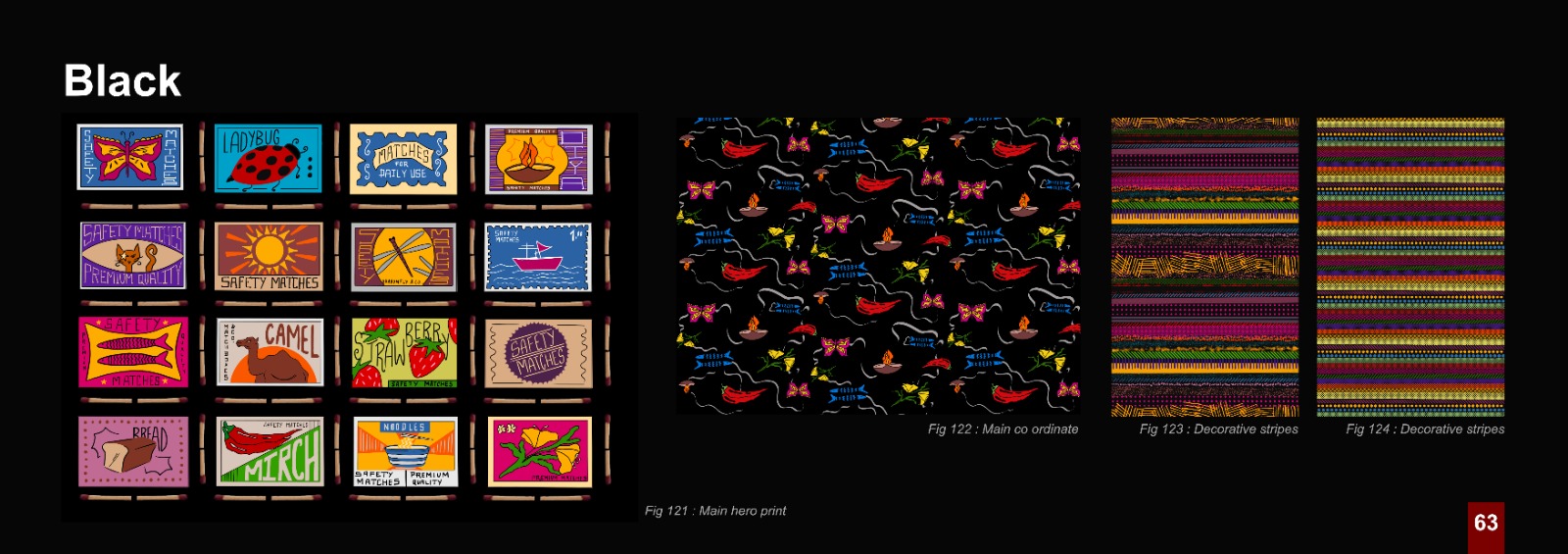
The same visual language was tested against different grounds and palettes. Plum petal, citrus ochre, white and black each change the rhythm of the motifs while keeping the hand-drawn character intact.
.jpeg)
Plum Petal — purple and muted pink build a dense, theatrical ground for the motif library.
.jpeg)
.jpeg)
.jpeg)
Colour tests make the design system legible: contrast, density and ground colour all shift the final textile mood.
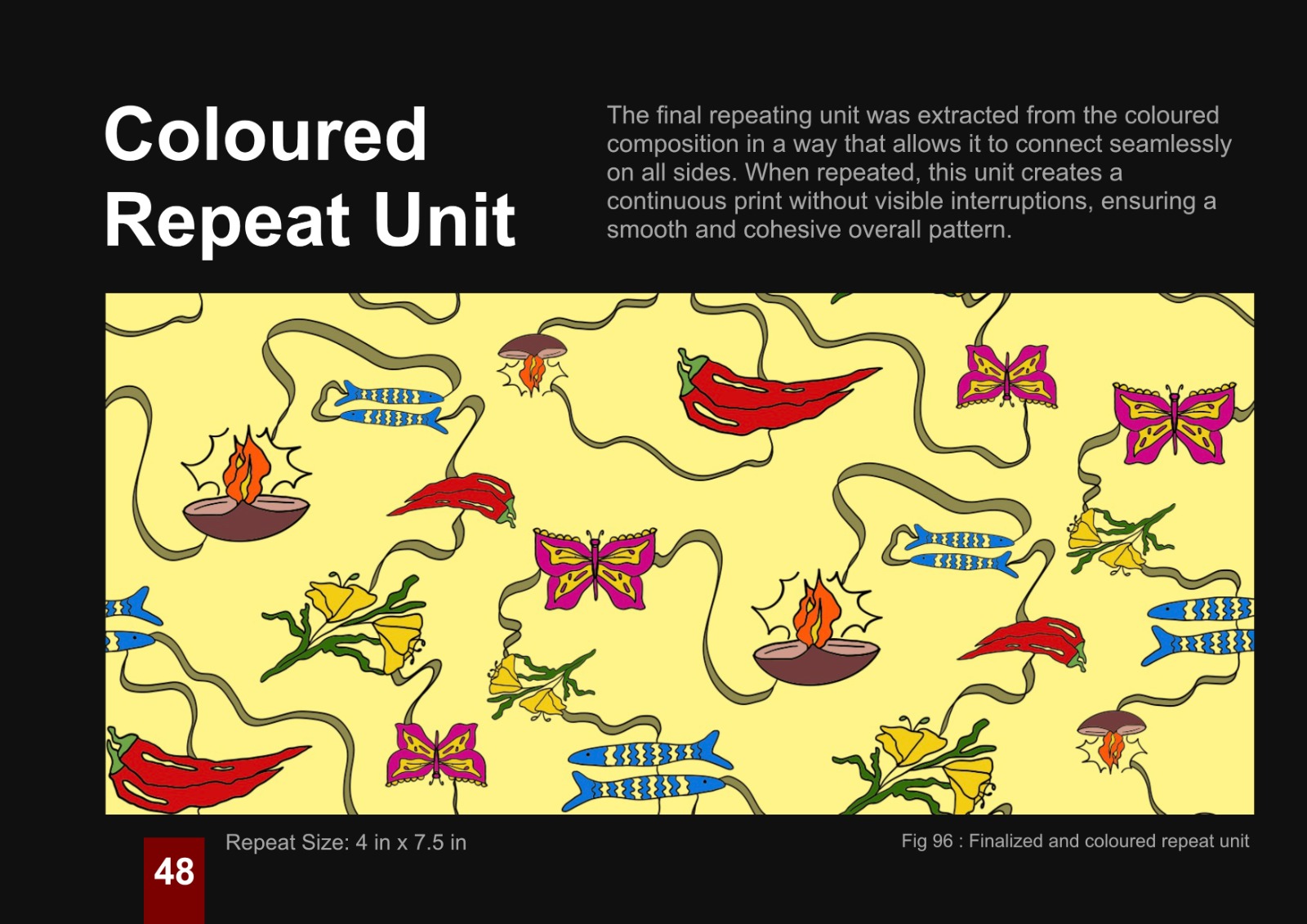
A repeating unit was extracted from the composition so it could connect seamlessly on all sides. Repetition turns individual motifs into a continuous surface without visible interruption.
.jpeg)
.jpeg)
.jpeg)
.jpeg)
.jpeg)
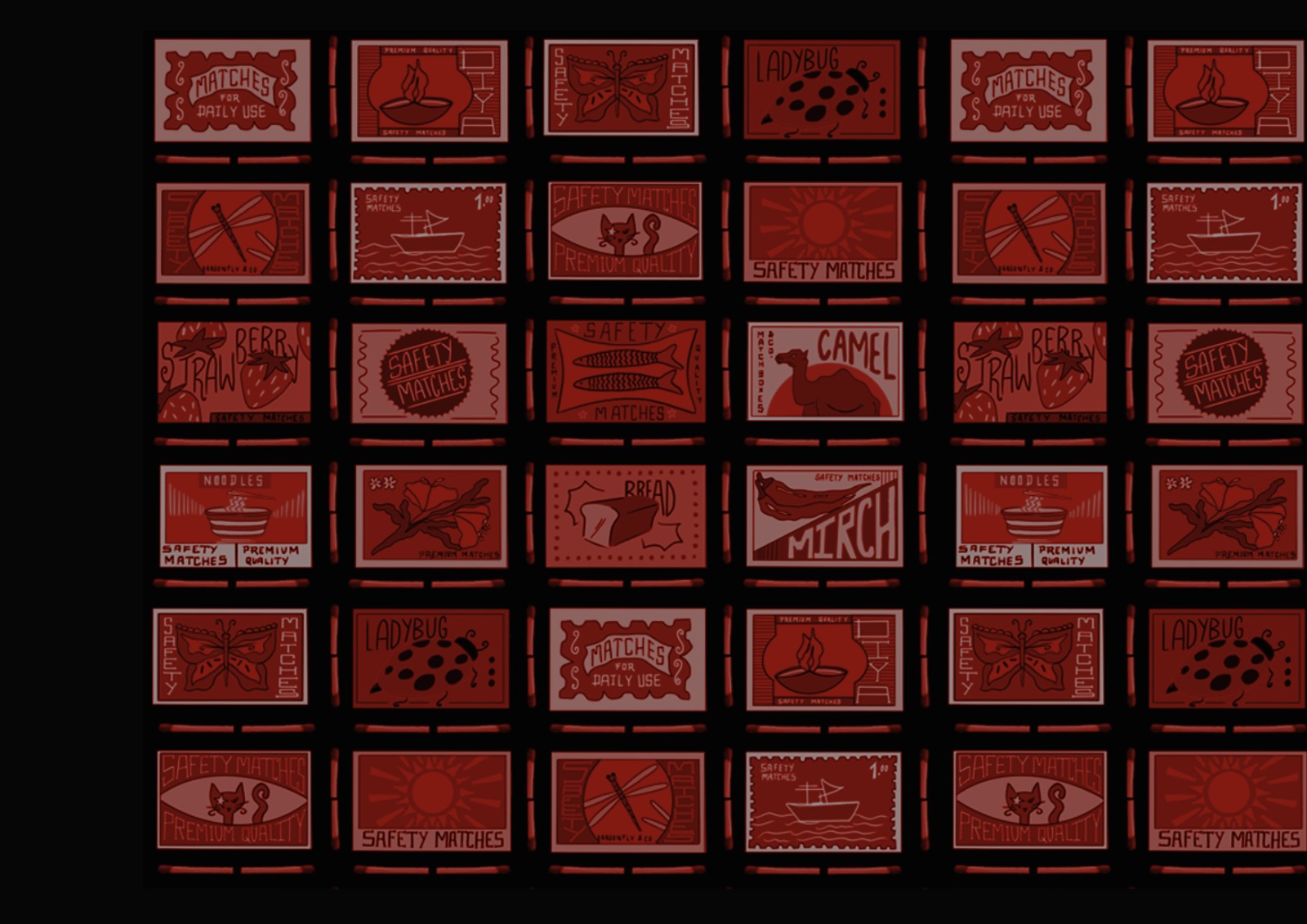
The repeat unit becomes a working toolkit: a drawing, a colour translation, a dark-ground version and a set of stripe structures.
Decorative bands isolate the smaller gestures inside the artwork. Dots, dashes, grids and hand-drawn lines are rearranged into rhythmic structures that can sit beside the main repeat.
.jpeg)
.jpeg)
.jpeg)
.jpeg)
.jpeg)
The final boards bring the system together: a repeat that can hold the field, stripes that can frame it, and checks that add a quieter counterpoint.
What stood out most was how every small step mattered. Watching individual threads gradually transform into a complete fabric made the process feel alive, deliberate and deeply satisfying. This work strengthened my belief that material knowledge is not separate from design; it is where the design becomes real.