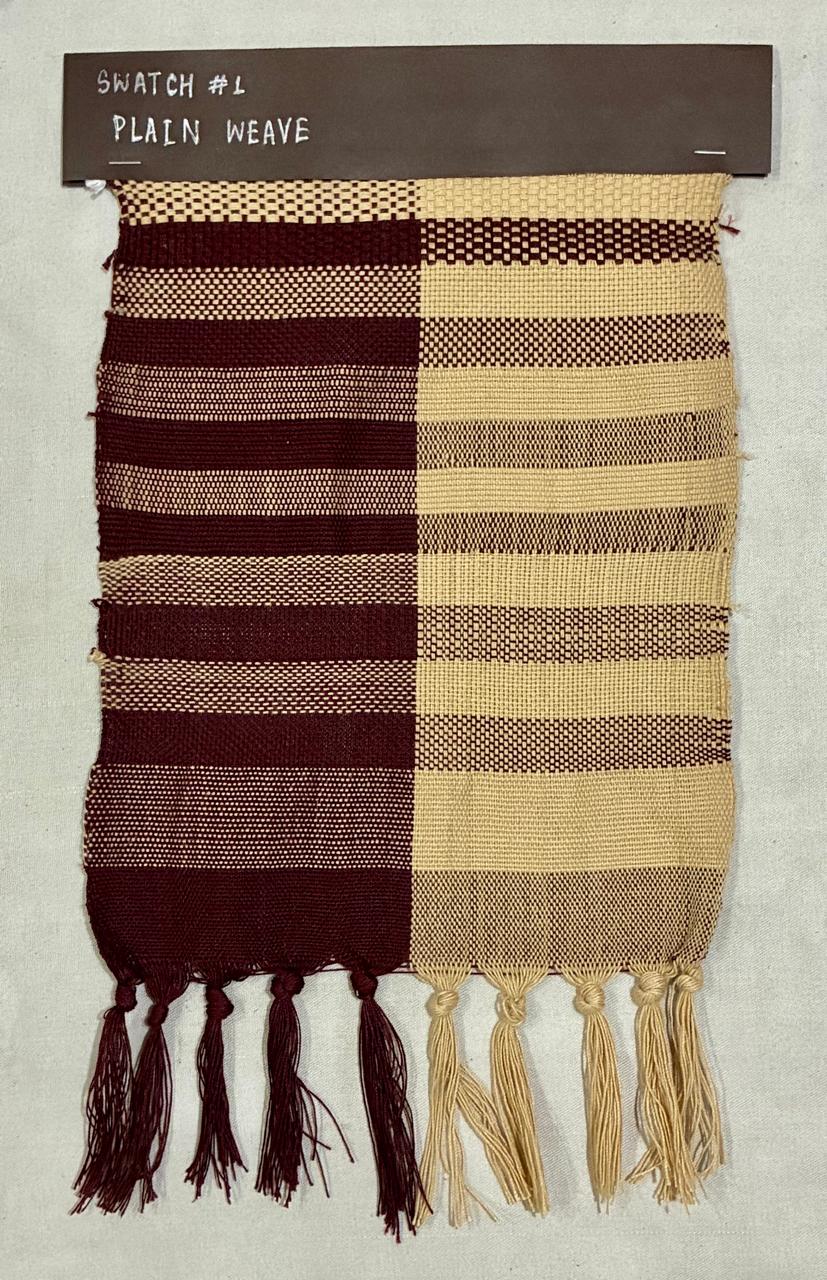
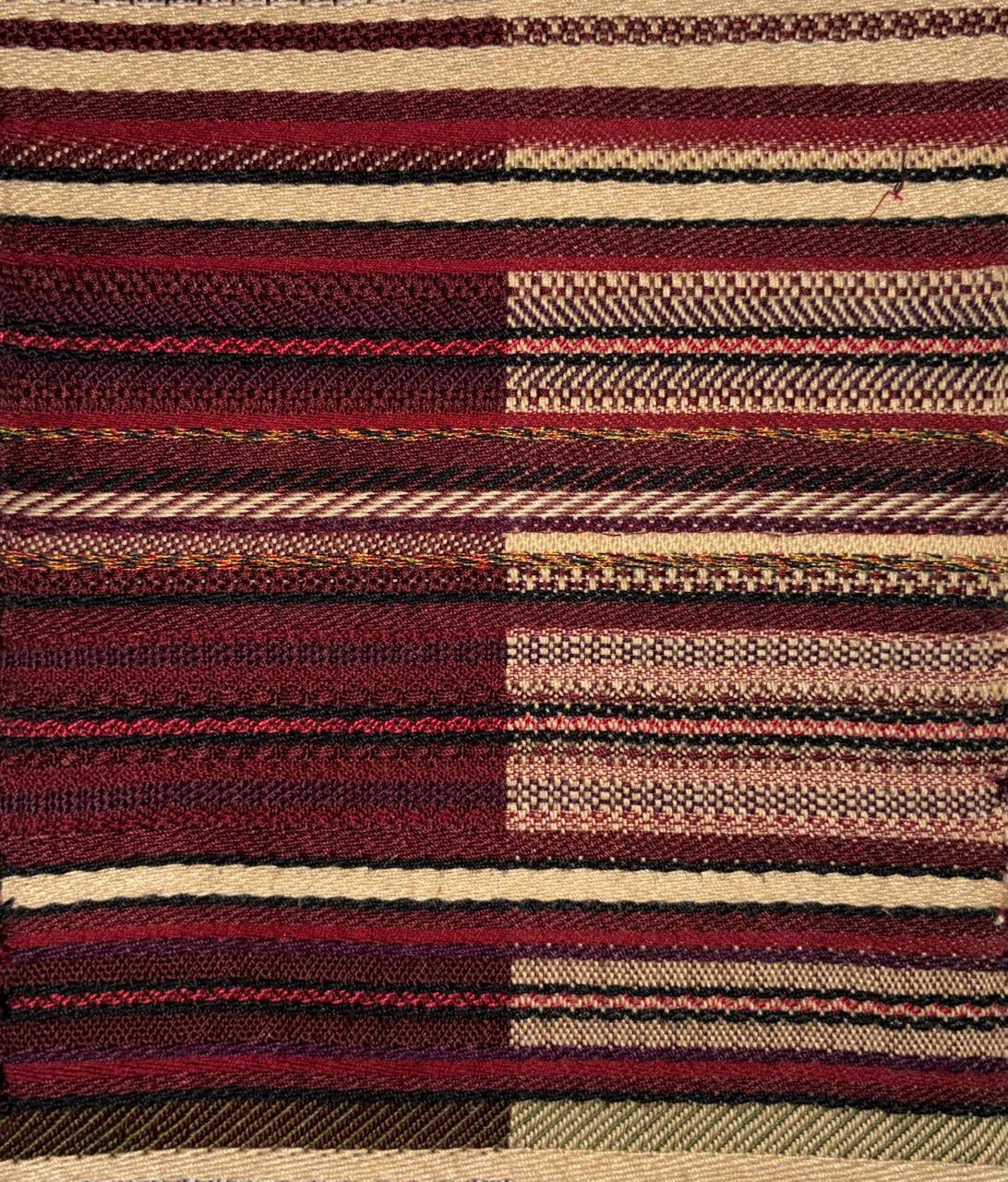
From yarn to fabric — a hands-on handloom journey through plain, twill, satin, honeycomb and material-led weave structures, built one thread at a time.
From yarn to fabric — this journey on the handloom has been both grounding and incredibly rewarding. Every swatch began the same way: setting up the loom, dressing the warp, managing tension, and carefully interlacing the weft to bring the weave to life.
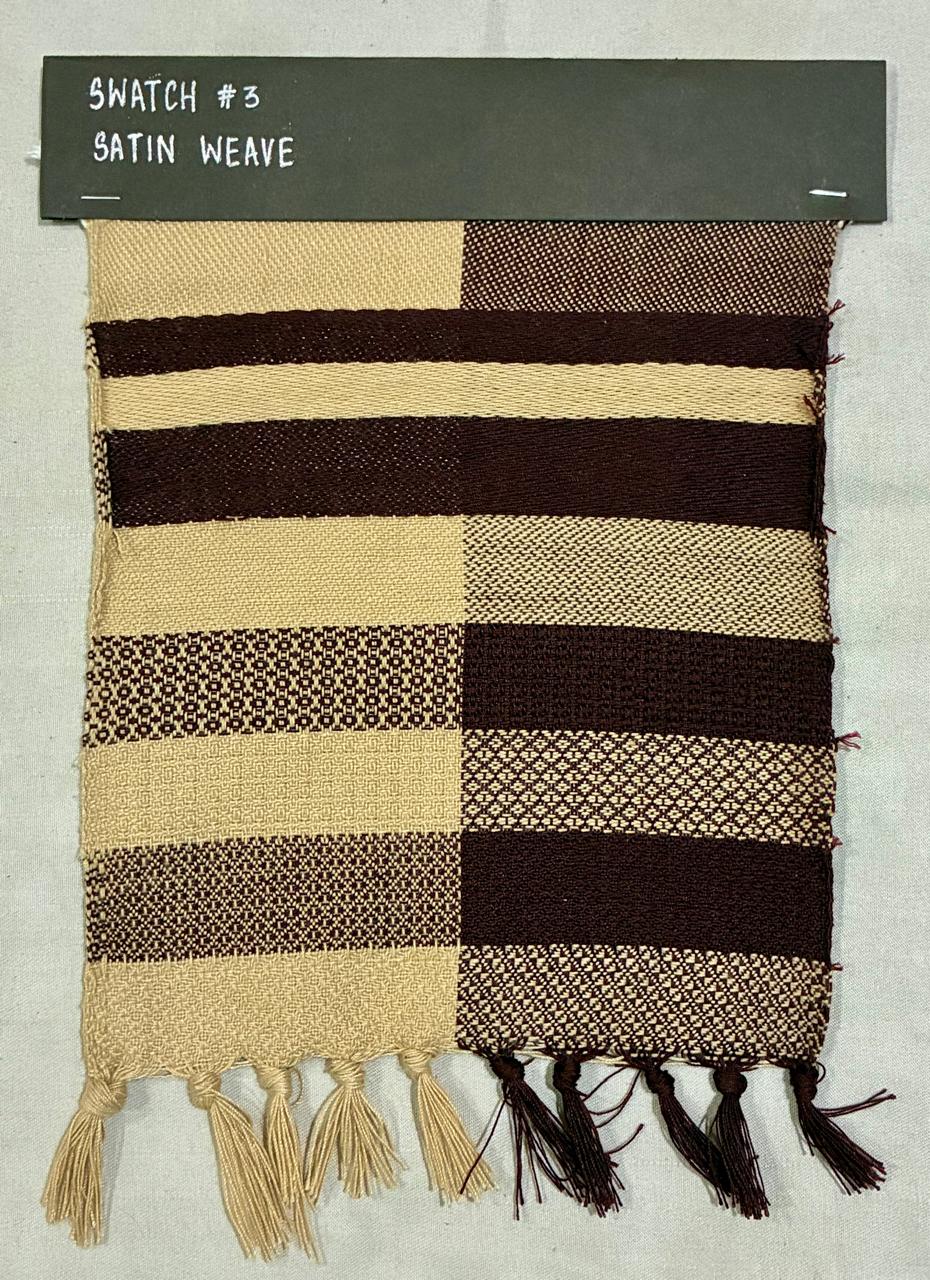
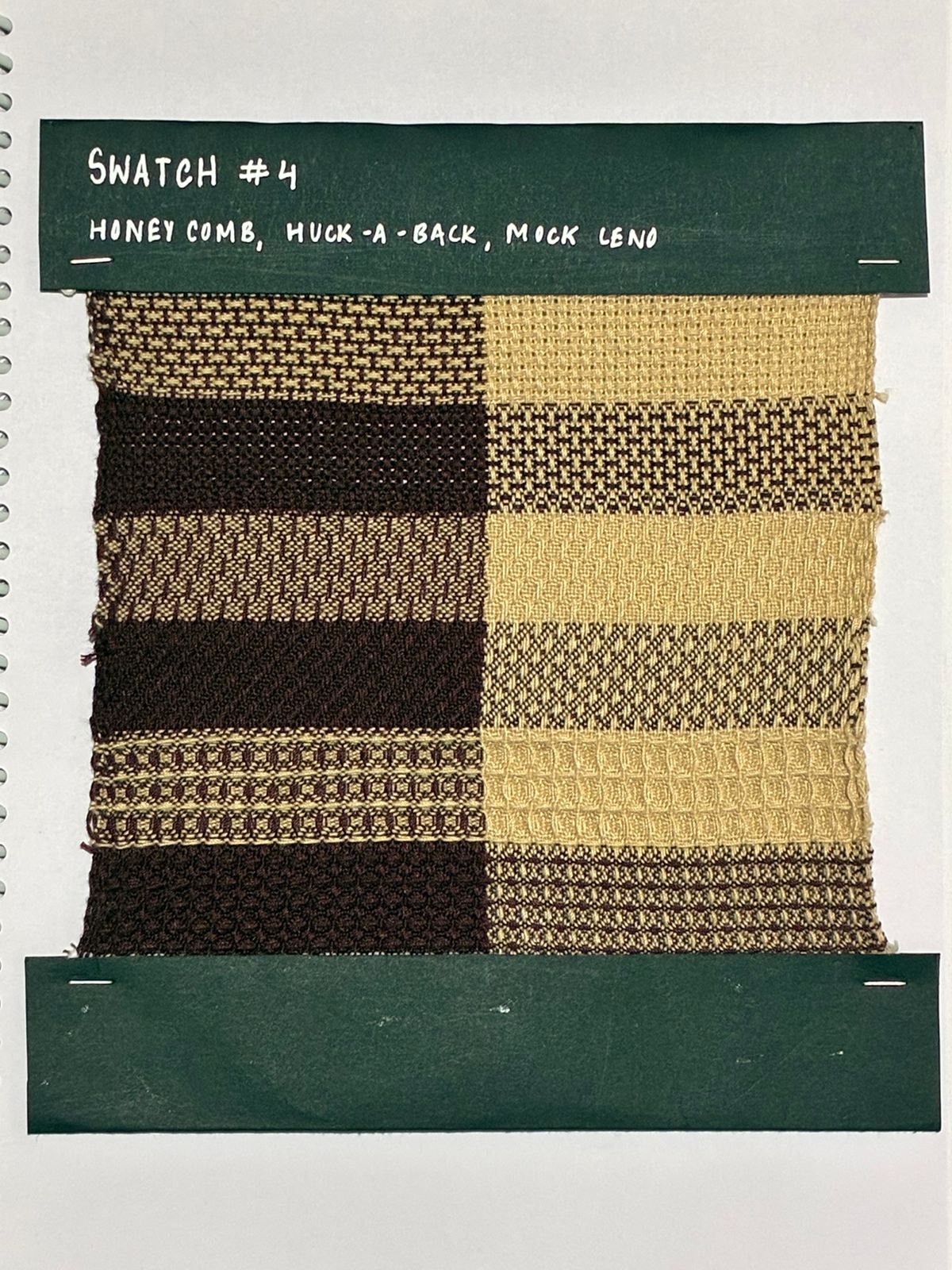
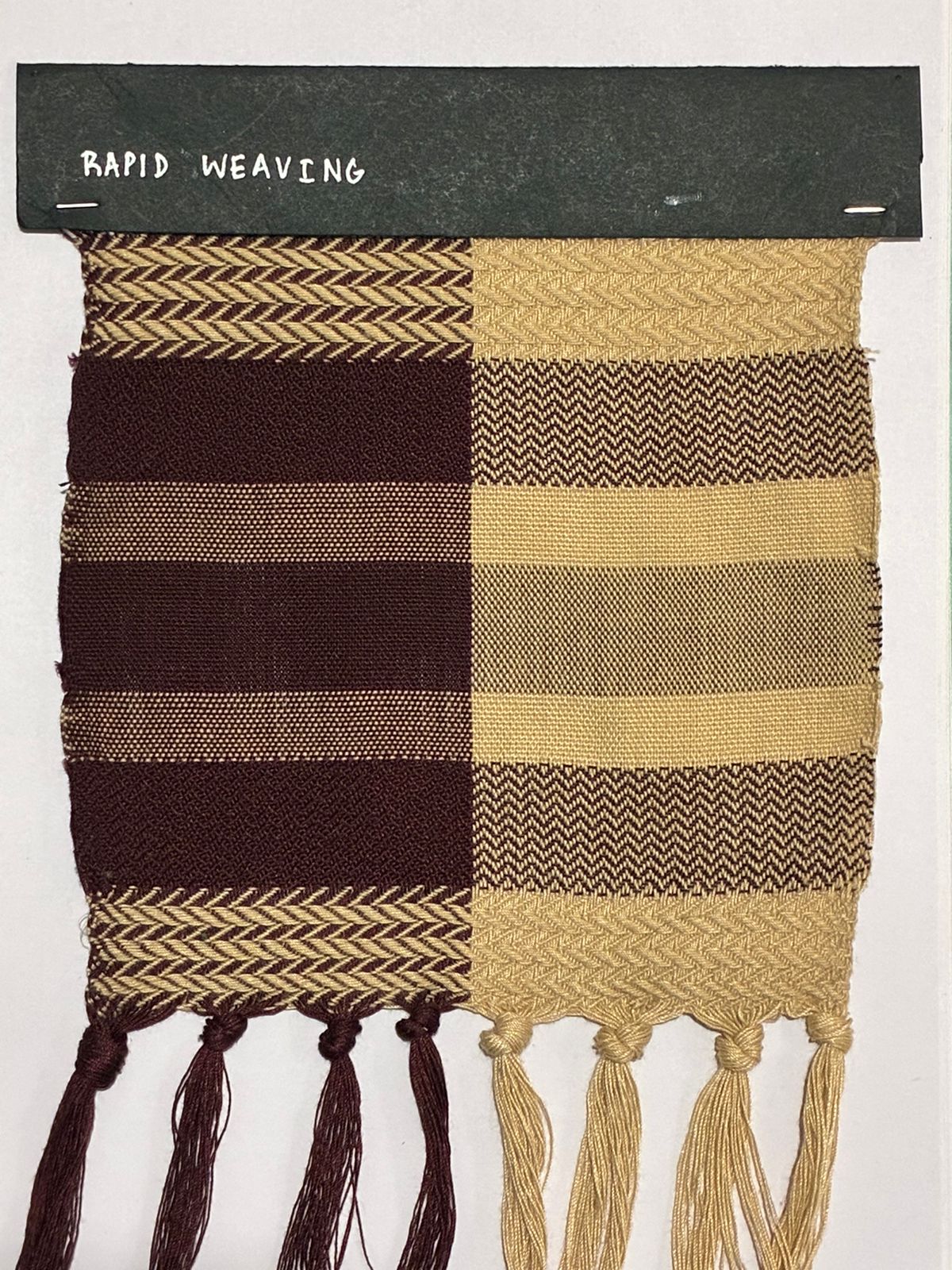
Across the project I explored plain weave with its variations, twill and its derivatives, satin and sateen with diamond figuring, honeycomb, huck-a-back and mock leno — and finished with a linear interpretation of an image alongside a freer material-led swatch.
Each piece is more than a sample. They are records of patience and precision — proof that even the smallest shift in tension or sequence shows up immediately in the cloth.
Before any thread crossed the loom, the work happened on graph paper — drafts, lifting plans, peg plans. Studying interlacement, repeats and reed counts taught me that every weave is, first, a small act of arithmetic.
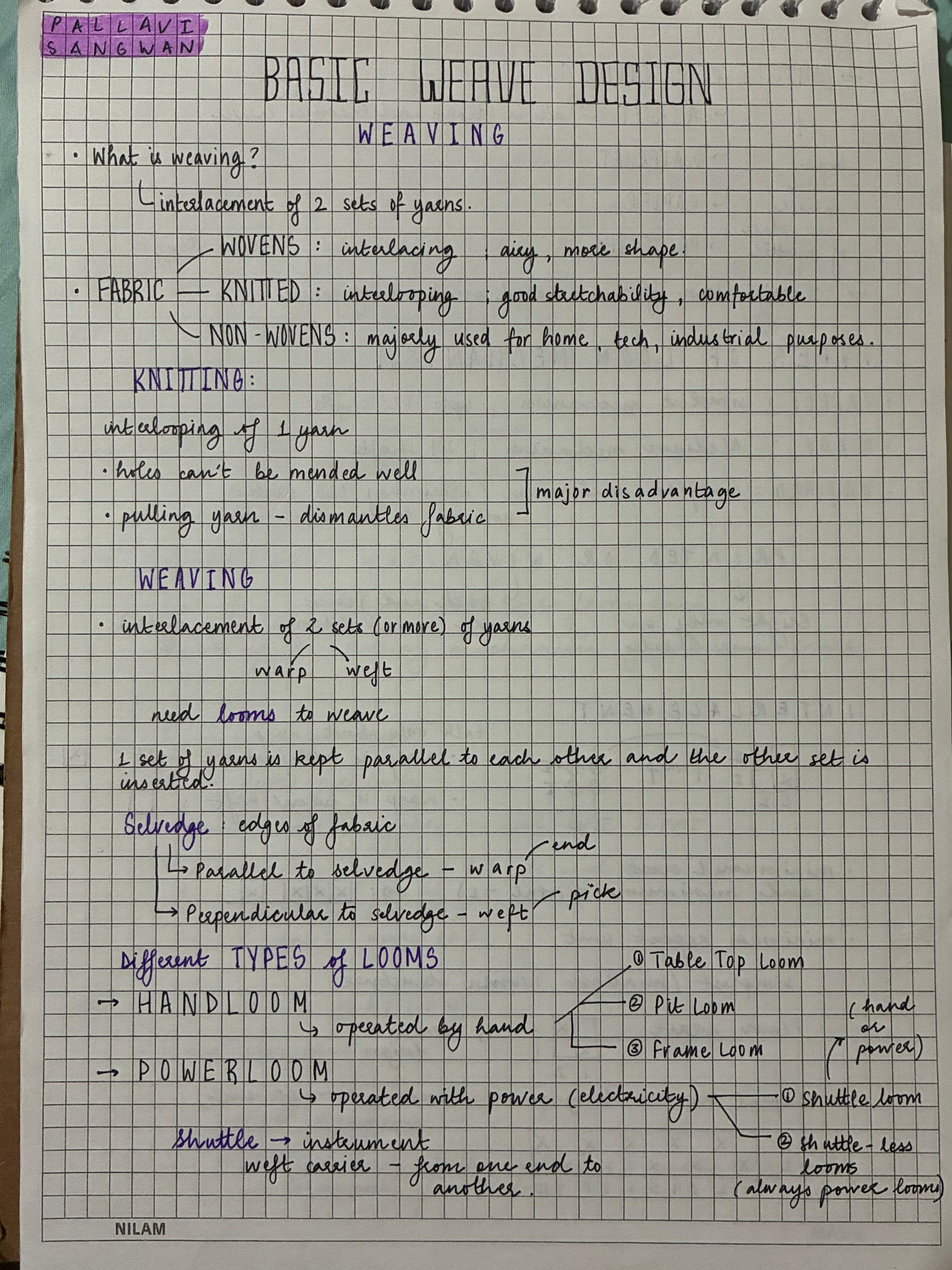
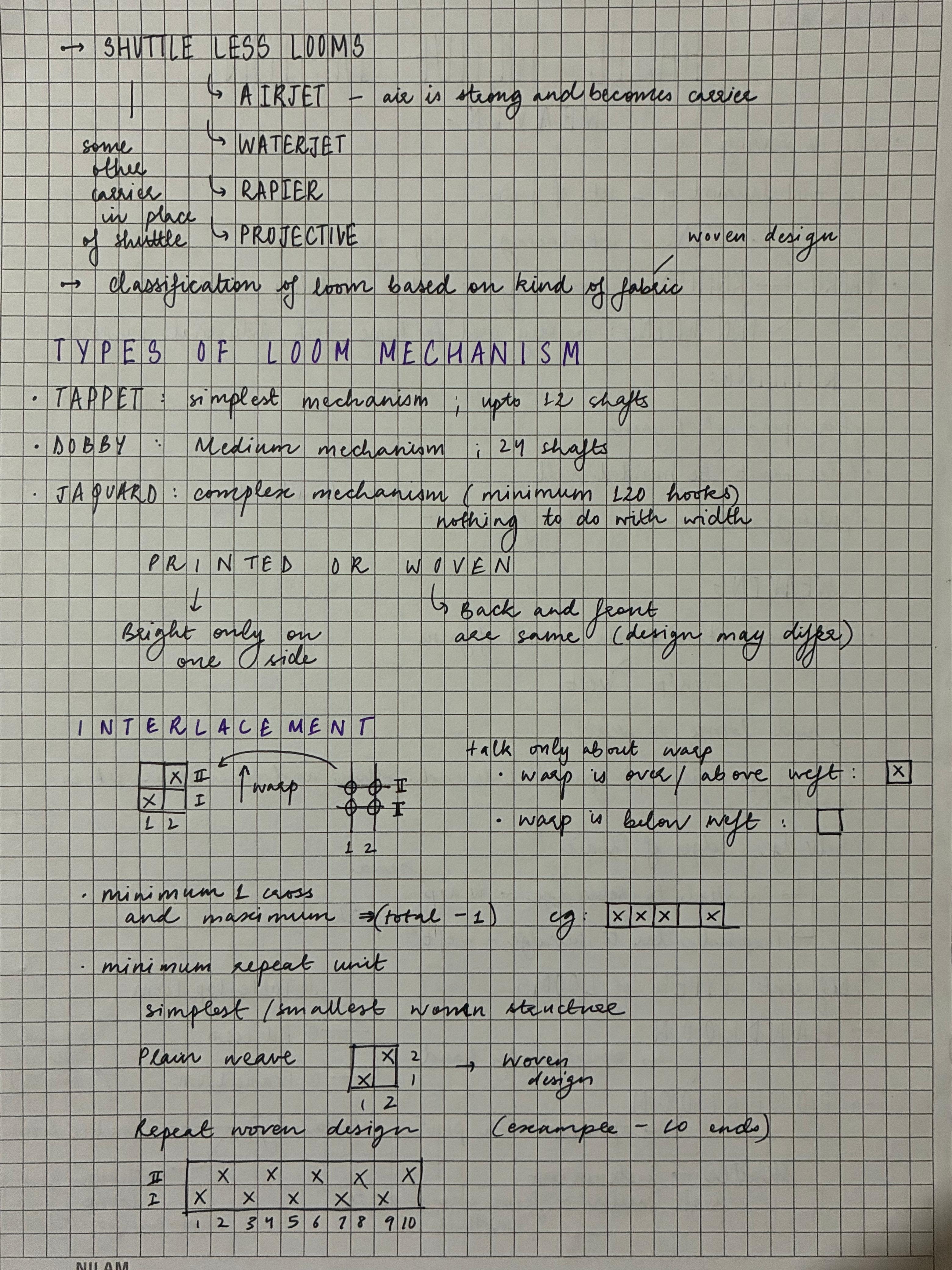
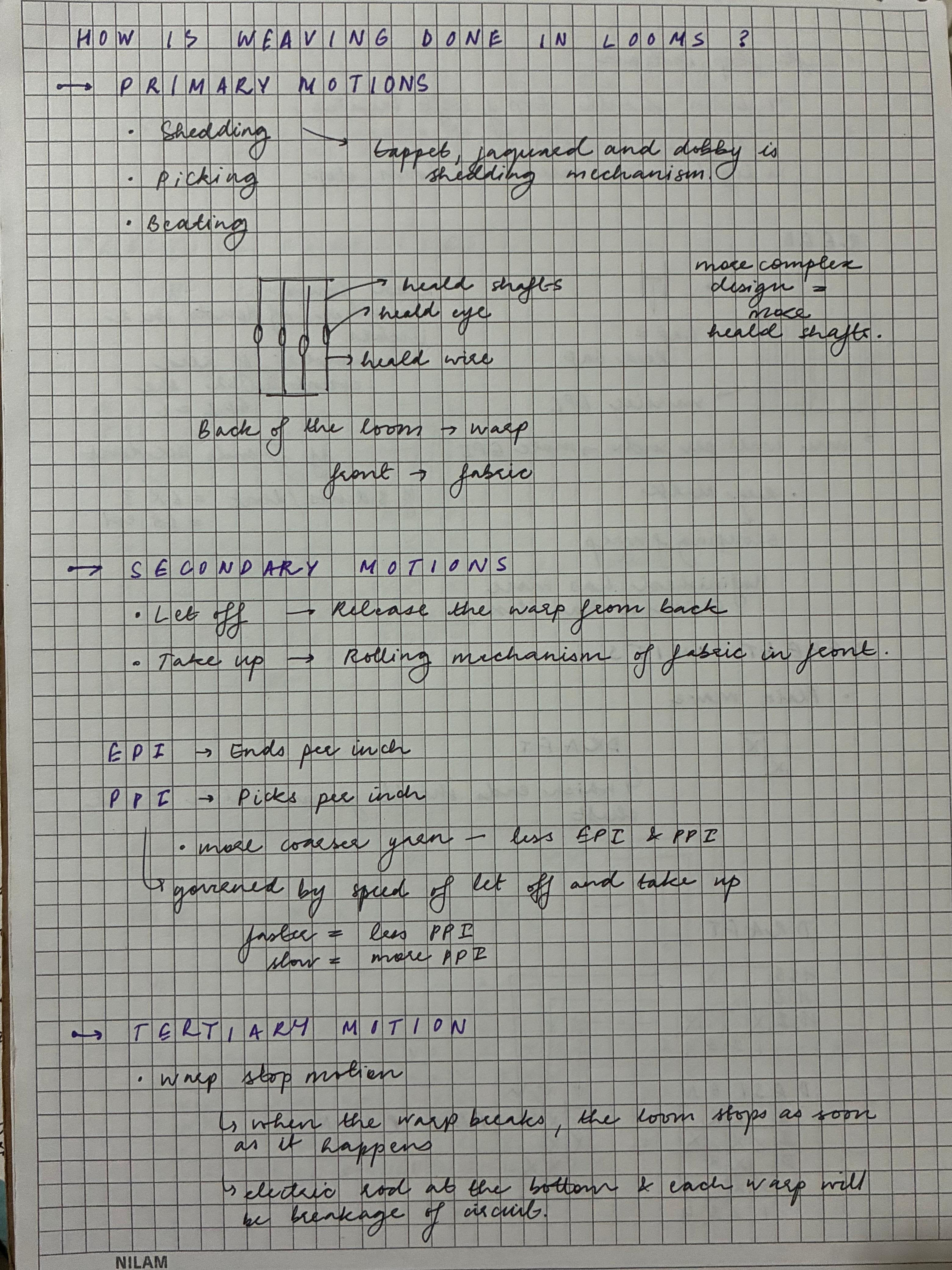
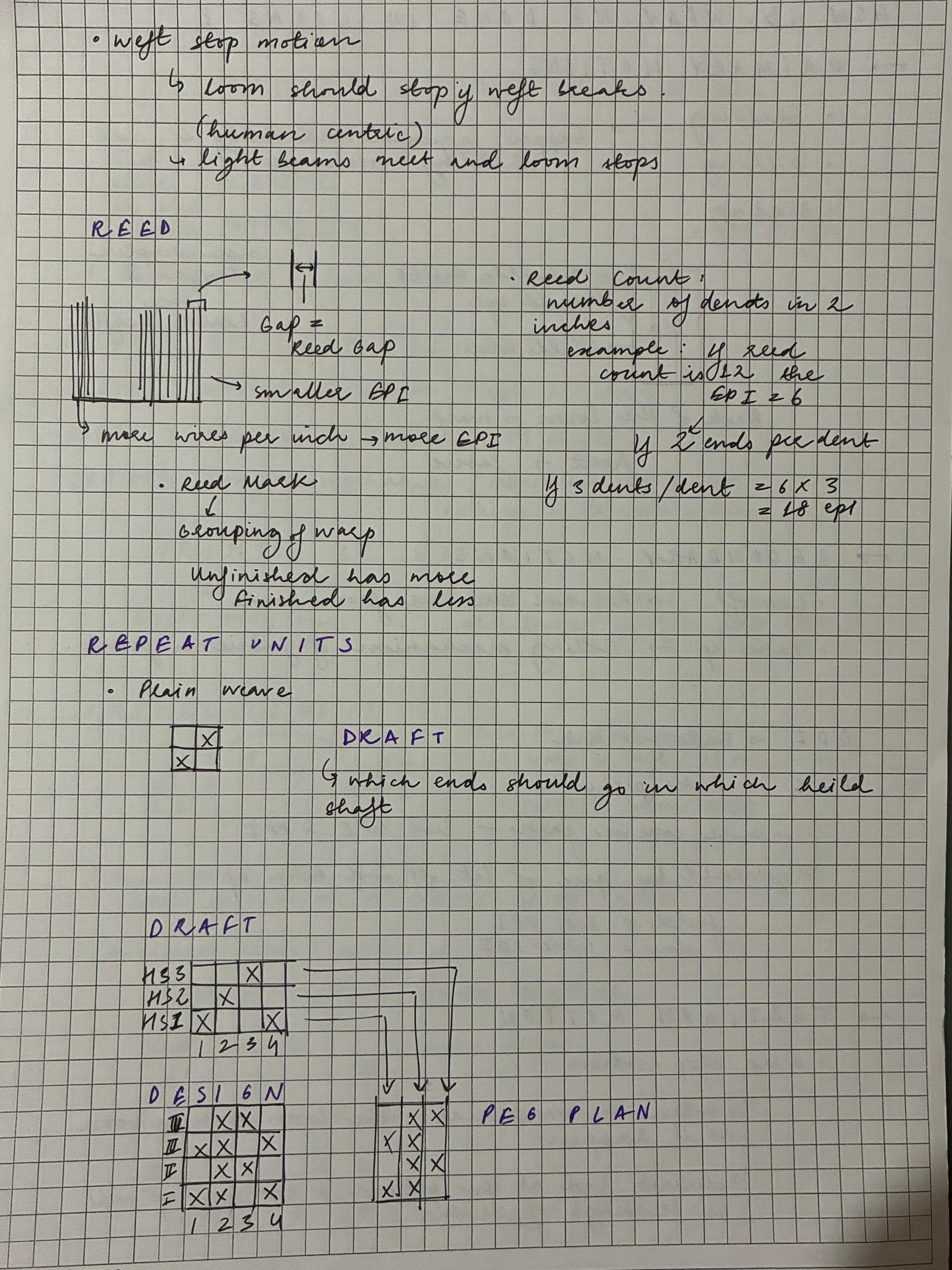
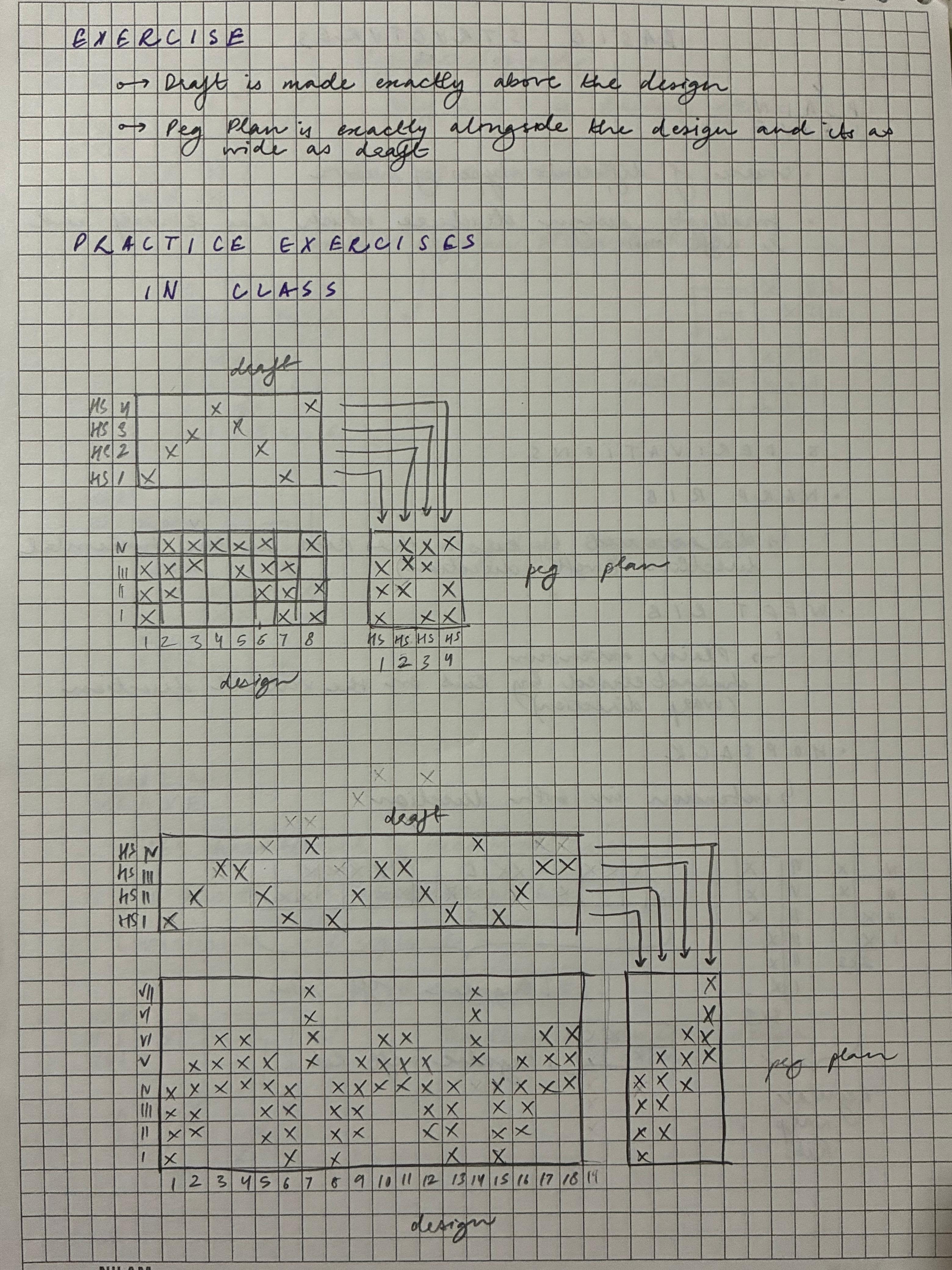
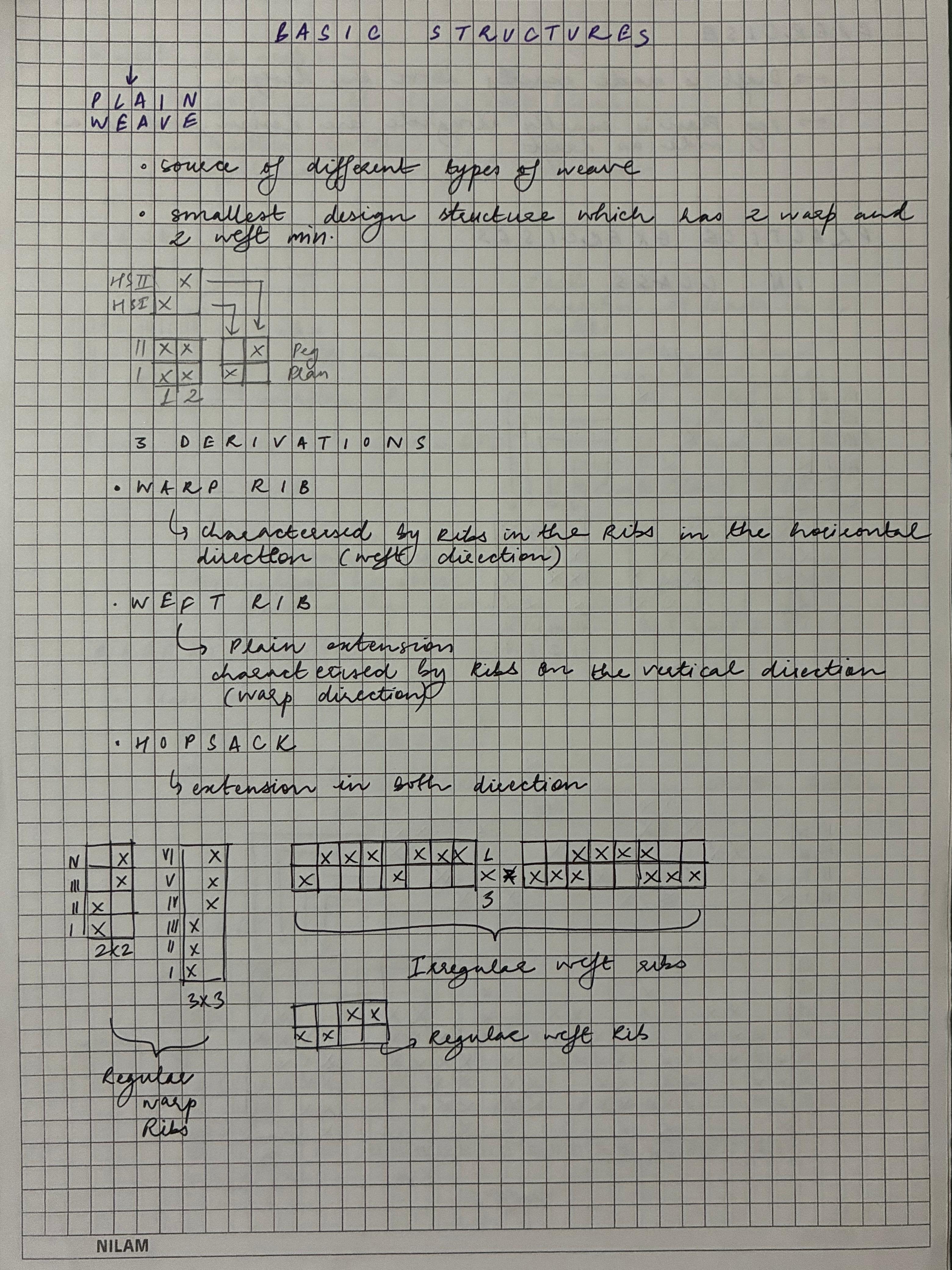
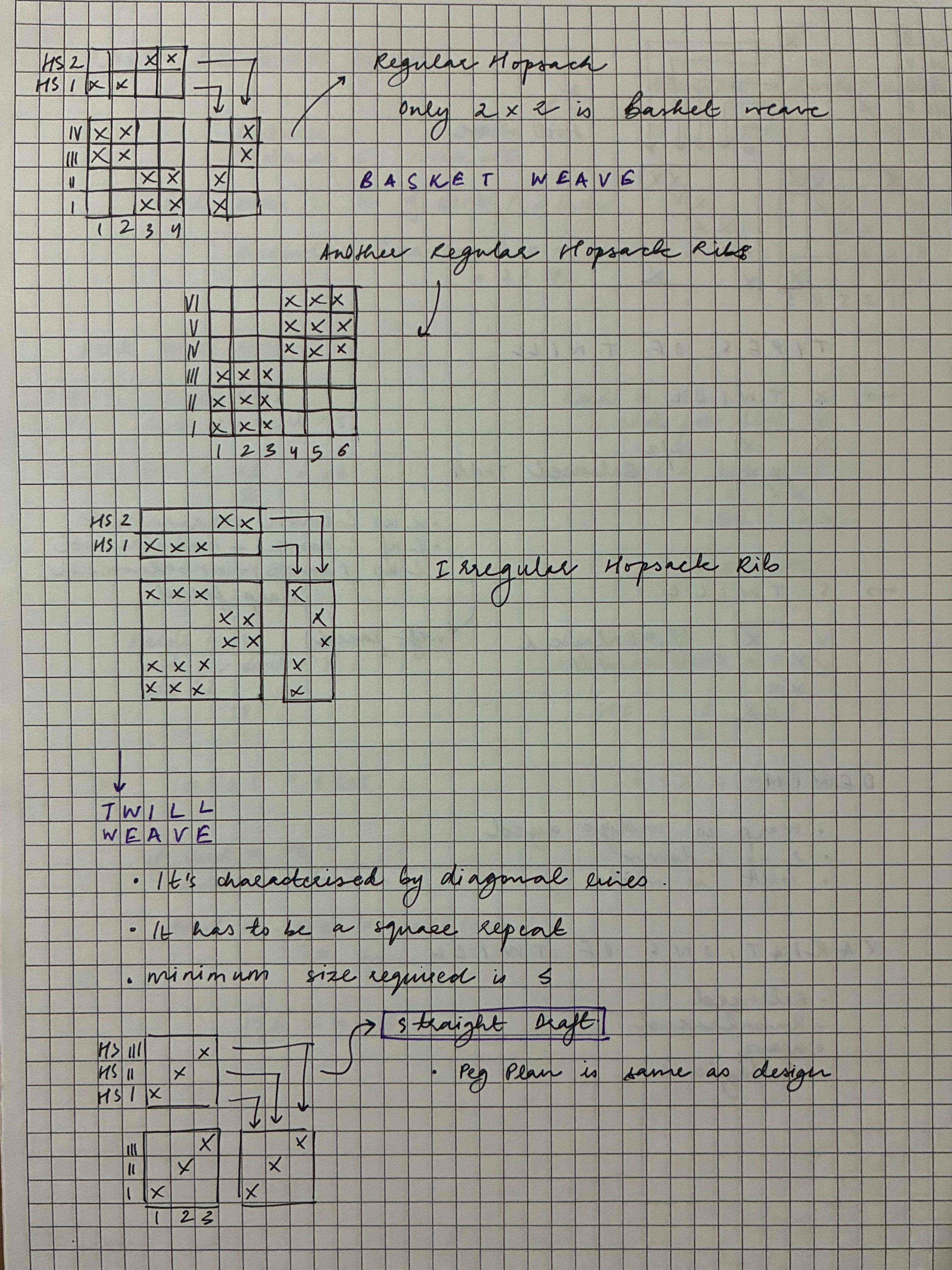
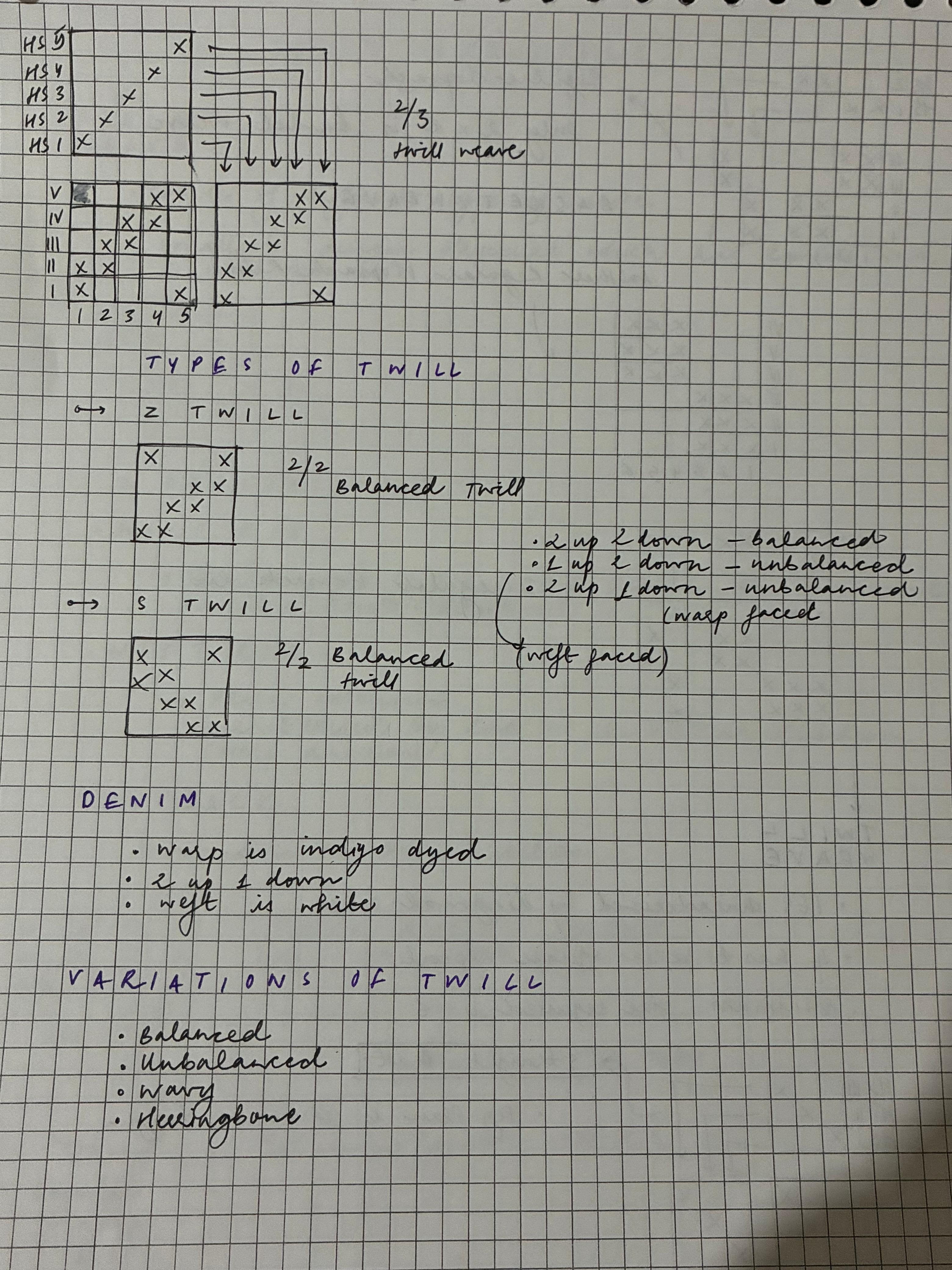
A working notebook from the weave-theory module — interlacement, primary motions, reed counts, drafts and peg plans. The grammar of the loom, written longhand.
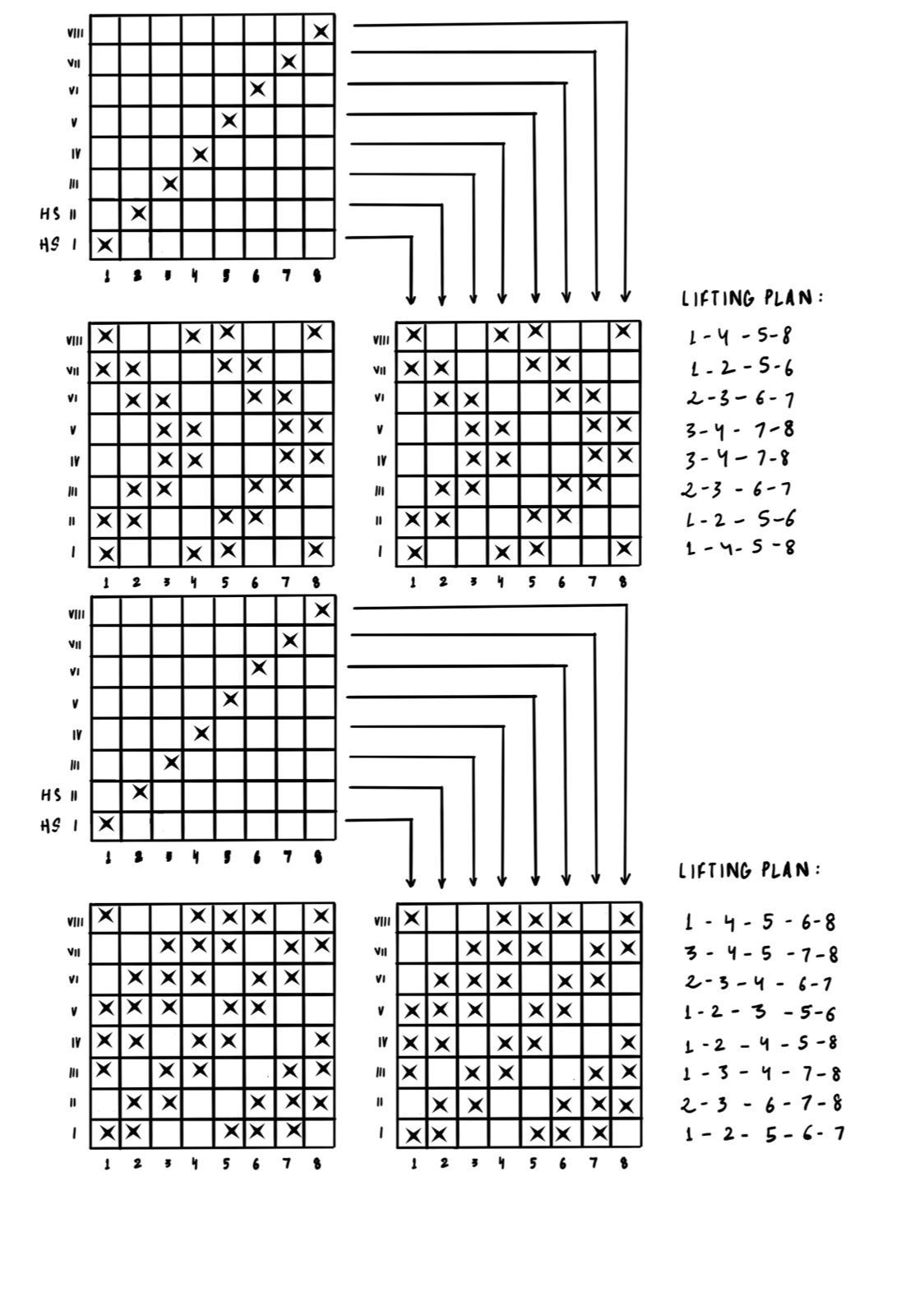
Lifting plans for twill variations — every × on the grid corresponds to a heald shaft raised on a specific pick. Mistakes here are mistakes in the cloth.
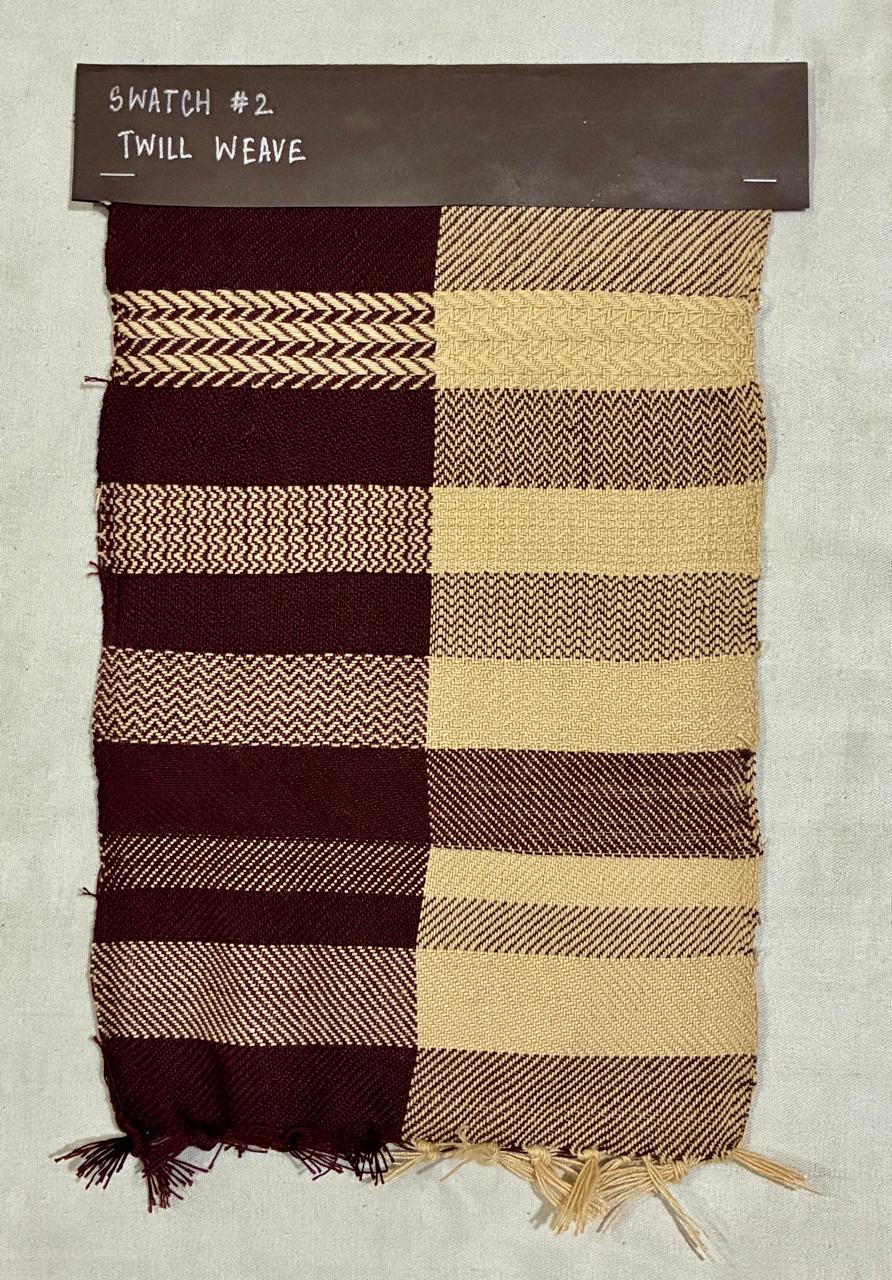
Each swatch began with the same warp — dark maroon and cream 2/20 polyester, dressed at 36s reed count with two ends per dent — so the entire collection reads as one body of work, the differences sitting in the weave structure and weft alone.
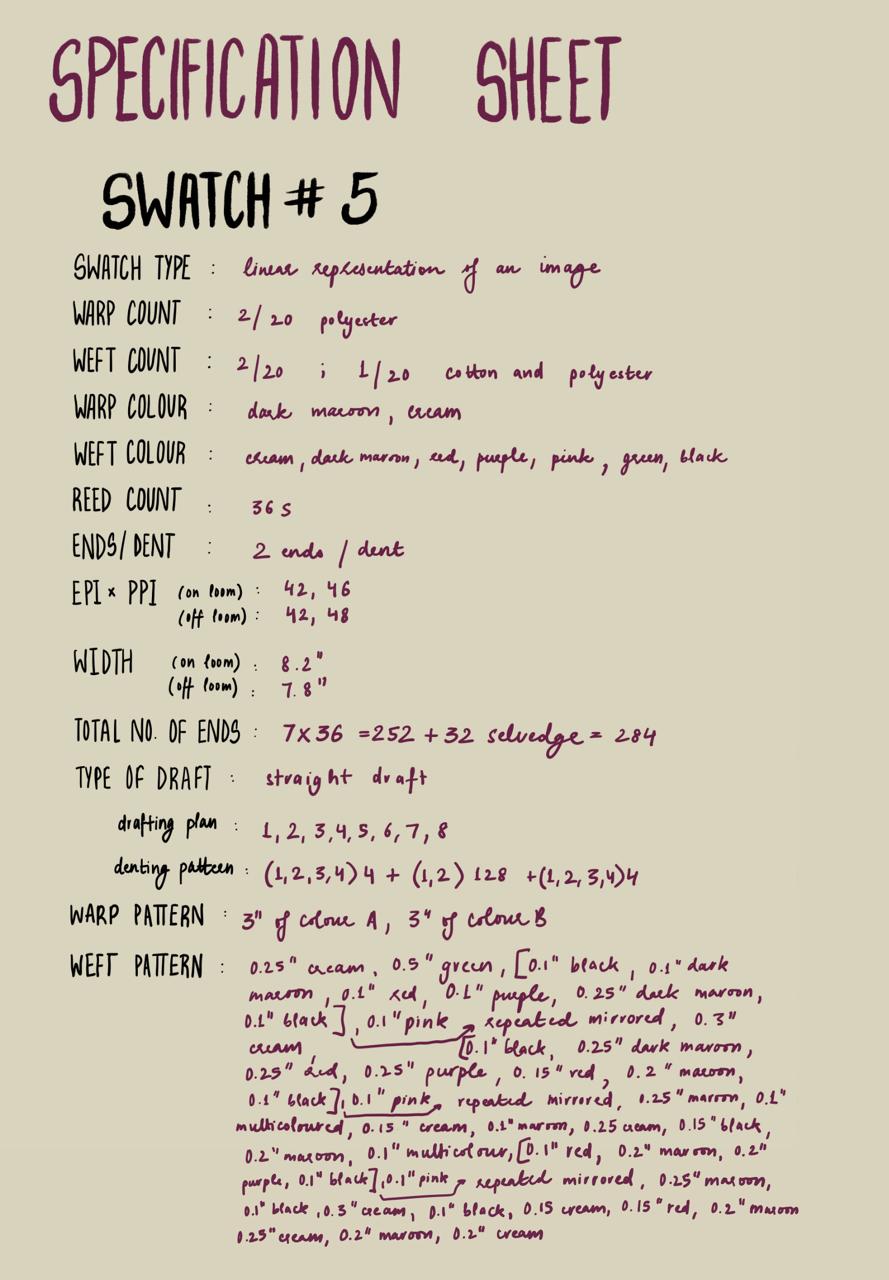
Swatch 05 took a single photograph — a deep-burgundy orchid stem — and asked it to become a length of cloth. Every petal, shadow and stem was translated into a stripe sequence on the weft, plotted in inches before a single thread was thrown.
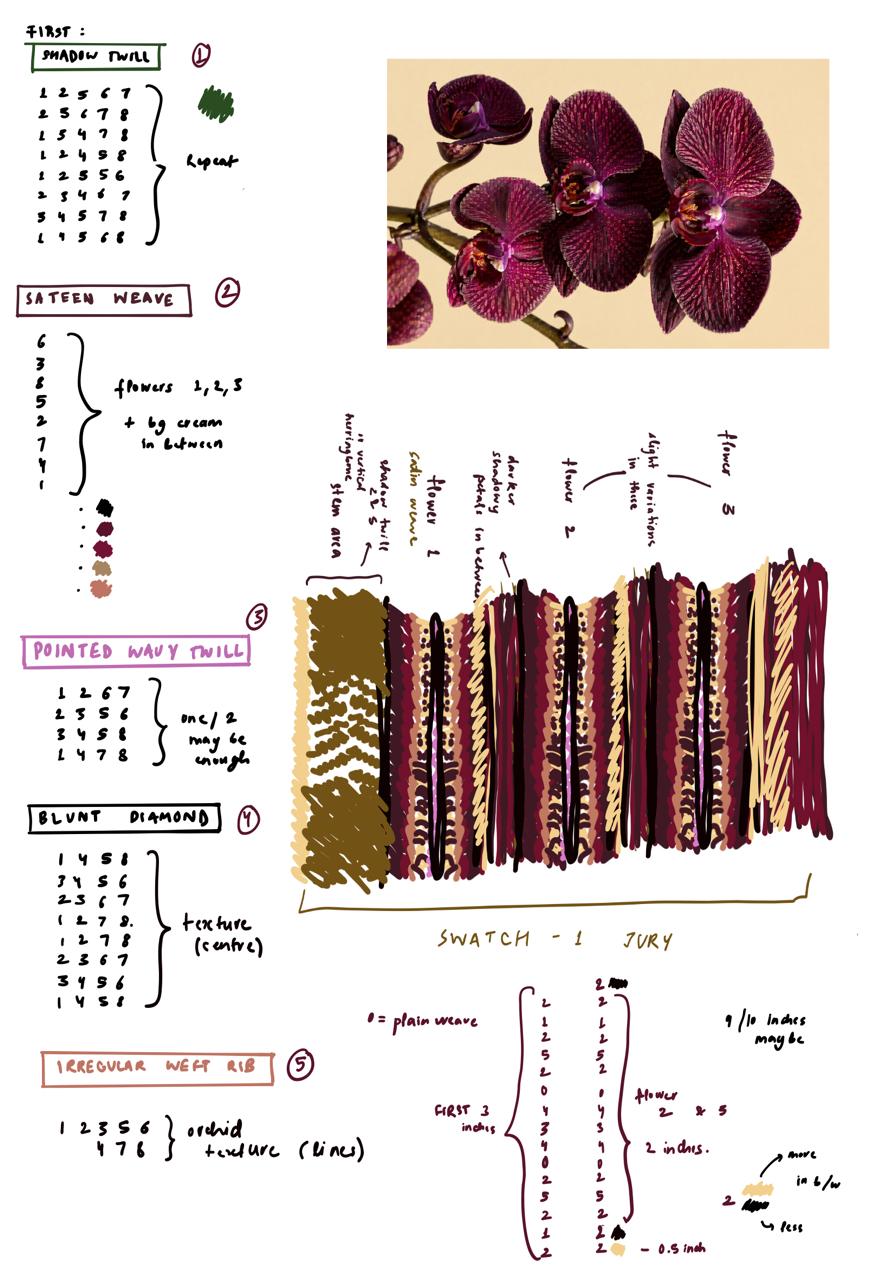
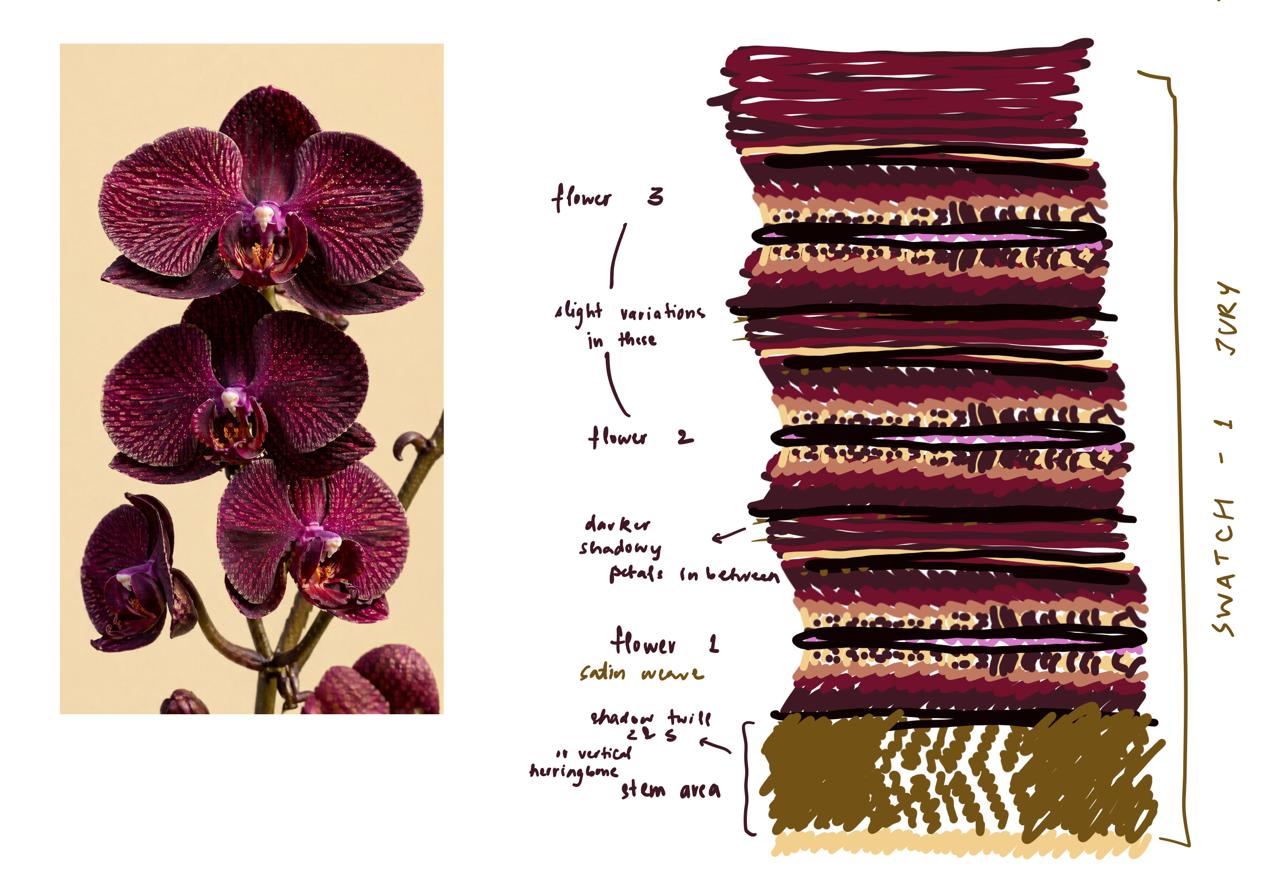
Source & translation — the orchid becomes a vertical sequence of weave structures: shadow twill for the stem, sateen for the petals, pointed wavy twill and blunt diamond for texture between flowers.
The final swatch broke the rules — opening the weft to whatever the hand reached for. Crushed velvet, ribbon, glass beads, mixed cottons and metallics, all interlaced into the same maroon-and-cream warp.
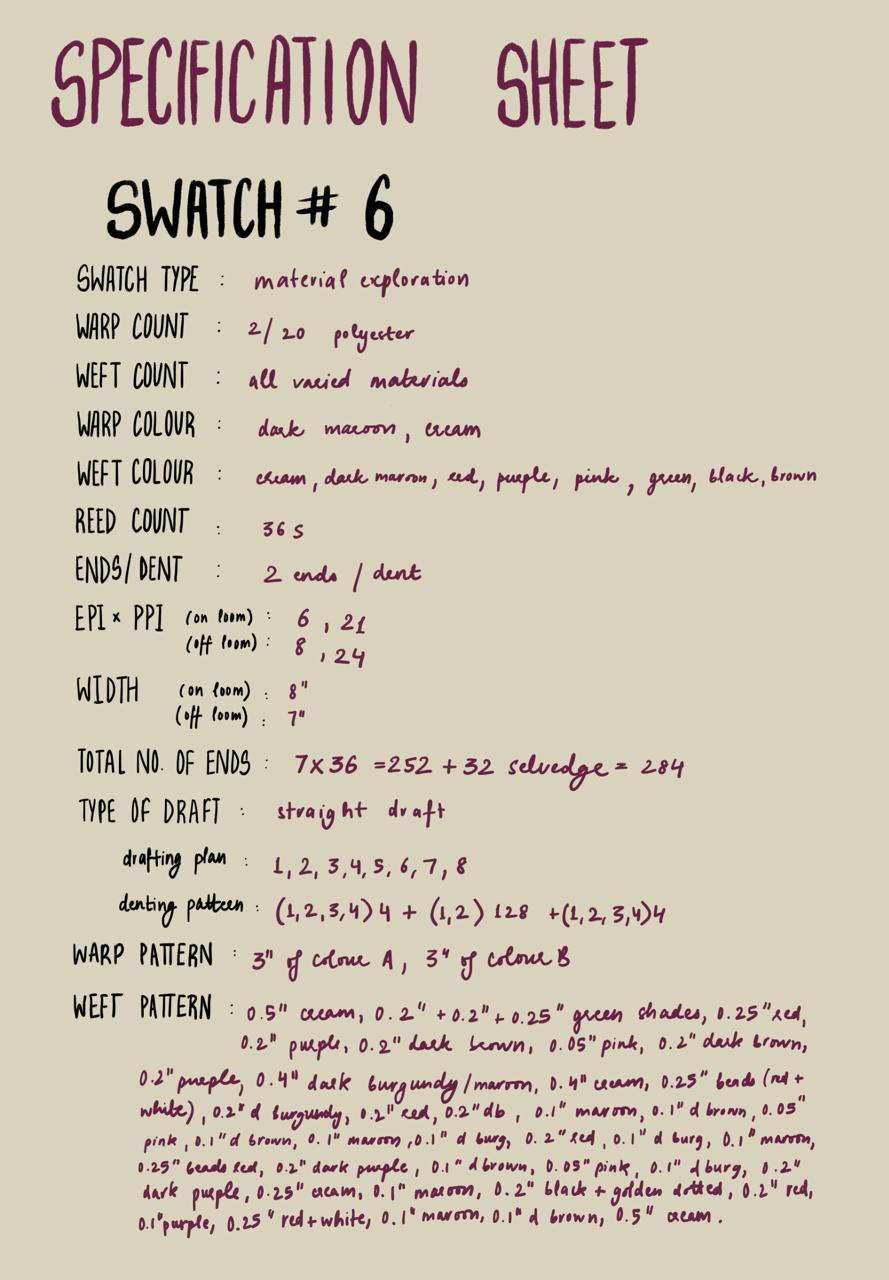
Swatch 06 — material exploration. The warp stays disciplined; the weft is set free. EPI 8, PPI 24, off-loom width 7″.
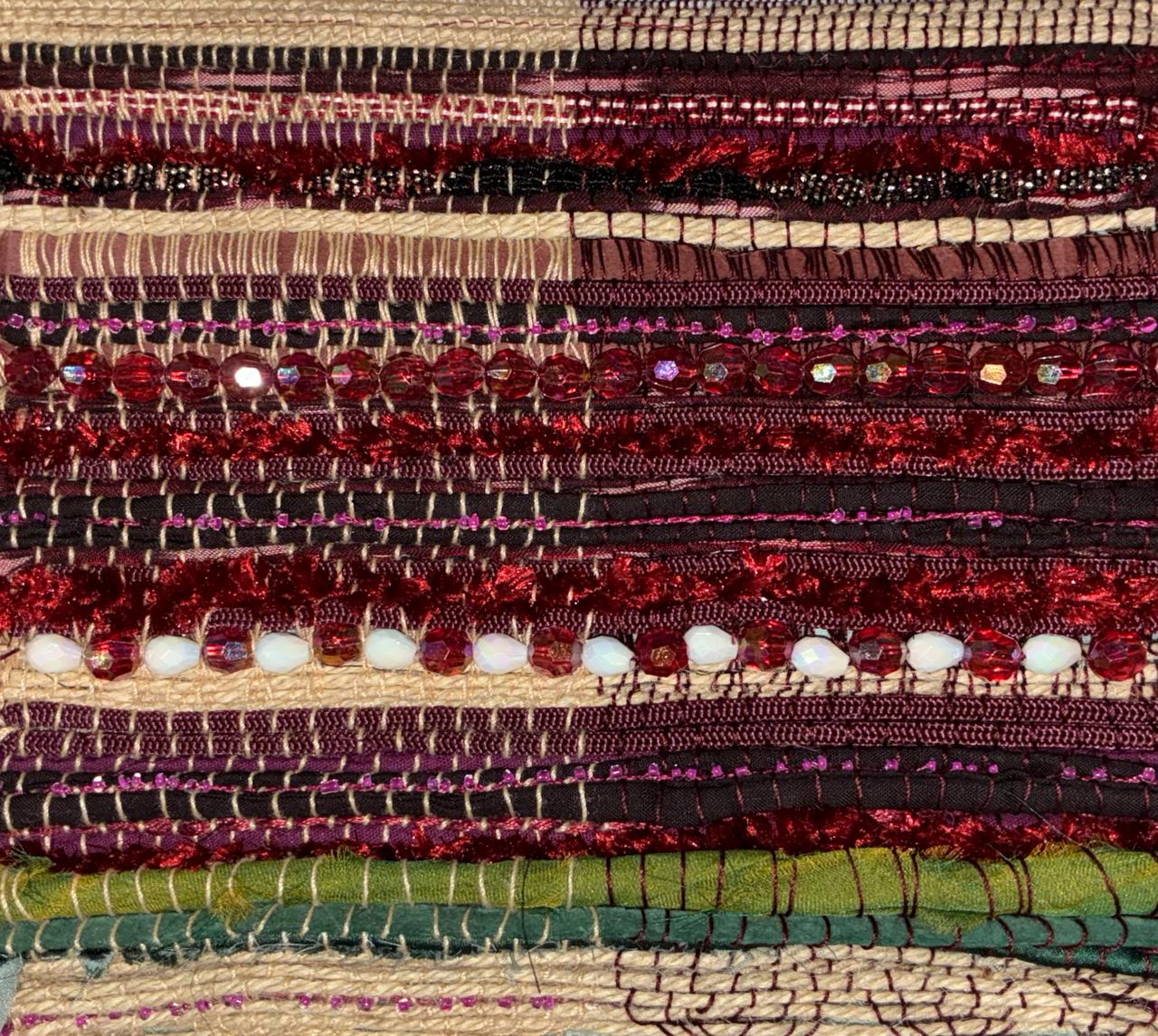
Detail & full view — even with a chaotic weft, the warp's order keeps the composition reading as one piece of cloth.
Each swatch closes with a full specification sheet — warp count, weft count, reed, ends-per-dent, EPI × PPI on and off the loom, drafting plan, denting and the complete weft pattern in inches. The cloth, written down so anyone could re-weave it.
There is something truly satisfying about watching individual threads gradually transform into a complete fabric, seeing the process come to life one line at a time. This project changed how I understand design — not only how something looks, but how it is constructed, where technique and detail play an equally important role.